Articles by Jesse King
The Future of Mental Health
The mission is simple: help make mental health as common and “everyday” as physical health is today.


TLDR
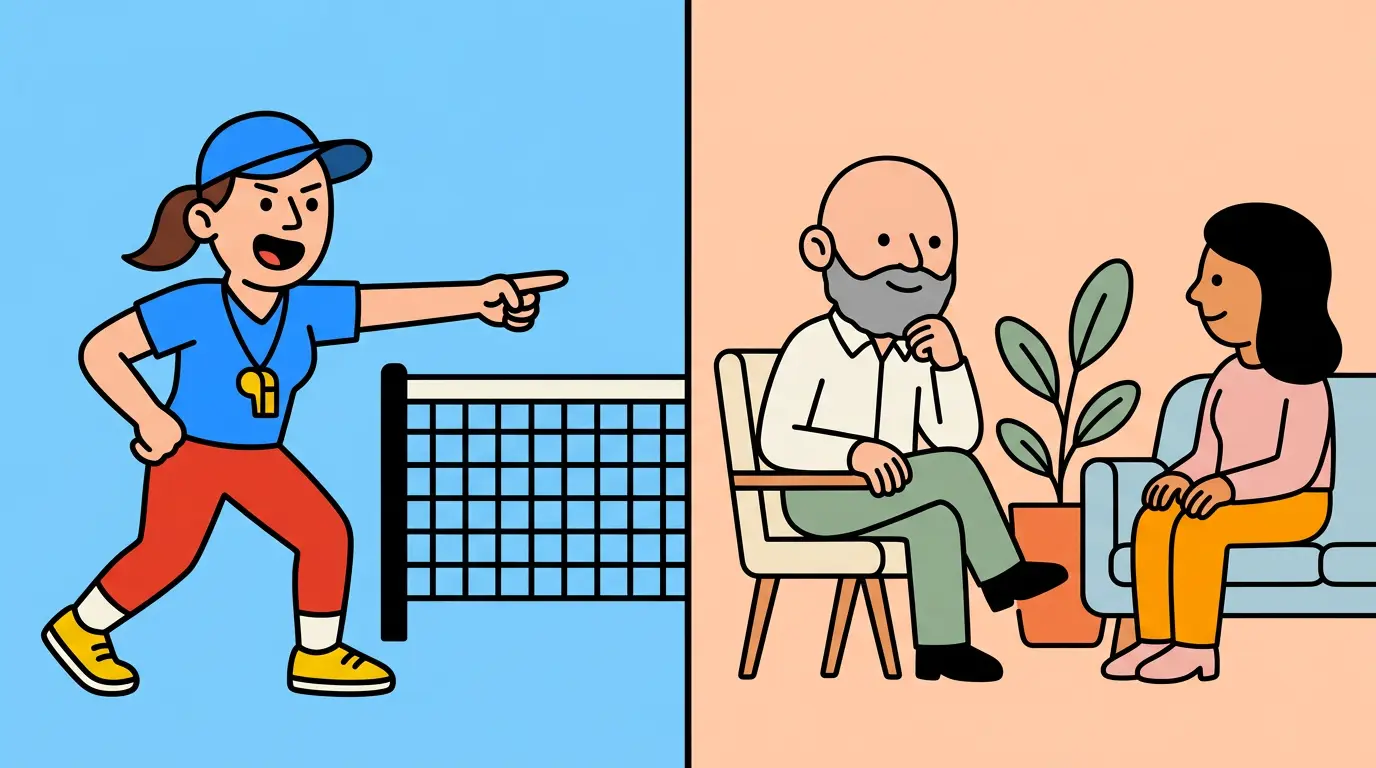
Thinking that 'mental health' is only therapy is like thinking 'physical health' is only physical therapy. And that’s just not the case.
50 Years From Now (2076)
As a coach turned psychotherapist, I continually find myself advocating for more coaching and mental “fitness.” It simply has more impact on overall health.
If you want to know the future of mental health, you only have to look at how far physical health and physical fitness have come over the last 50 years.
Physical Health
-
1970s
Gyms? Running for fun? Not so common.
-
TODAY
Now it’s everywhere and everyday.
Now, consider what the landscape of mental health could look like in 50 years.
Mental Health
-
TODAY
Mostly emergency services, used only when there’s a problem.
-
2070s
It will be completely different.
You’re going to see more and more options for the equivalent of mental “fitness.”
From Reactive to Proactive
Mental health is often viewed as a sort of emergency services. Something that people use only when there is a problem: relationship strife, issues at work, anxiety, death/grief, etc. This is appropriate, but it’s a limited view on the value of mental health to everyday life.
Life is completely uncertain and when we get “knocked sideways” by unexpected events and circumstances, therapy and counseling can get us back “on track.”
Now consider physical health in the same way. Events and circumstances can arise where you need emergency services. These are traumatic, emergency services that help you stabilize and get back to your baseline physical health.
But you know that with your physical health, your main focus is preventative. With physical health you are both reactive and proactive.
- Reactive
- Emergency services you use when there is a problem. Therapy and counseling get you stabilized and back “on track.”
- Back to baseline
- Proactive
- Preventative, fitness and skill based work you do every day, even when nothing is wrong.
- Everyday fitness
This is why comparing mental health to physical health is so important. It reveals how little proactive work most people put into their mental health.
Start “Working In”
This is why I advocate for people to start “working in.” Working in is like ‘working out’ for your body, but for your cognitions and emotions.
Most people’s minds are constantly trying to solve for their emotions. That’s a lot of energy. That’s a lot of work. That’s a lot of worrying, assessing, and planning.
You replay the conversation. You rehearse the conflict. You try to predict how someone will react. All of this is on auto-pilot. It’s compulsive, not intentional.
If you change your relationship with your emotions (your conditioning), you’ll have more energy, less mental load, and less worrying. It’s cause and effect. Emotional Agency® helps you do exactly this.
Instead of being closed off, controlling, and rigid, you get back to your baseline of being open, curious, and playful.

Related Article
Start Working In
You train your body without a second thought. What if you trained your mind and emotions the same way?
Read the ArticleWant to learn more? Want to start working in? Know someone who could benefit? Use the buttons below.
Questions to Consider
For Your Consideration
- 01 When was the last time you worked on your 'mental health' when nothing was wrong?
- 02 What would it look like to work in, the same way you work out?
- 03 How many different types of 'physical health' programs and modalities have you tried?
01 Read Next